The Allawah House Report, released by Women’s Community Shelters and Pacific Link Housing, found 82 per cent of women who stayed at Allawah House transitioned into safe, secure long-term housing, well above the sector average of around 60 per cent. Older women remain one of Australia’s fastest growing cohorts experiencing homelessness. Over four years, the project provided almost 15,000 safe bed nights and supported 45 women aged over 55 experiencing homelessness and escaping domestic and family violence.
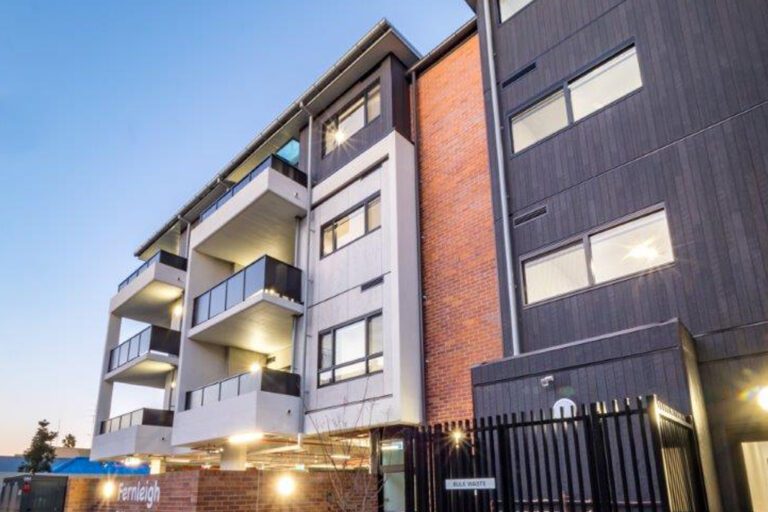
Allawah House transformed a vacant former aged care facility into transitional supported accommodation through a partnership between Women’s Community Shelters, Pacific Link Housing, property owner BEA Projects and the NSW Government, which supported the project through refurbishment funding and rental assistance.
The project combined safe housing with trauma-informed wraparound support to help women move from homelessness into permanent housing.
Ian Lynch, Pacific Link Housing, CEO, said:
“Good housing outcomes don’t happen by accident. They happen when organisations work together around a shared purpose.
Pacific Link Housing’s role was to safeguard the property, as part of entering into arrangements with the property owner, and to provide stable tenancy management and help women navigate what is often a complicated path into permanent housing. Having trusted relationships and consistent support gave women the confidence to take that next step.
Allawah House demonstrates the impact that can be achieved when housing providers, specialist services, government and the private sector each bring their expertise to the table to benefit the community.”
Annabelle Daniel OAM, CEO, Women’s Community Shelters, said:
“Homelessness does not always look the way people expect. For many older women, it begins with family violence, a relationship breakdown, financial hardship or the loss of a home they thought they would grow old in. It can happen quietly, and far more quickly than people realise. These are women who have worked, raised families, cared for others and contributed to their communities. Yet too many find themselves without a safe or affordable place to call home.
Australia cannot build its way out of today’s housing crisis overnight. But we can unlock the buildings we already have to provide safety today.
Allawah House shows what’s possible when vacant buildings are repurposed to provide safe housing and trauma-informed support. Women don’t just find a place to stay, they are supported to establish permanent housing, regain stability and rebuild their lives.”
Operating at $75.76 per bed night, Allawah House delivered supported accommodation at a fraction of WCS’s 2025 average crisis shelter bed night ($130) and significantly below the NSW sector average for temporary accommodation ($165). The result demonstrates that meanwhile use housing can deliver strong housing outcomes while making productive use of vacant buildings that would otherwise sit empty.
This report proves that the model of meanwhile use housing works. The question is no longer whether it should be part of Australia’s housing response, but how quickly we can scale it. Governments, property owners and communities all have a role to play in unlocking underutilised buildings, creating more pathways out of homelessness, and giving more women the opportunity to rebuild their lives with safety, stability and dignity.
Liesl Tesch MP, Member for Gosford, said:
“The housing crisis requires practical solutions as well as long-term investment. Allawah House shows that when government works alongside community organisations and the private sector, we can respond quickly to urgent housing need while creating pathways to lasting housing security.
This meanwhile use project is proof that innovation, collaboration and local partnerships can change lives”
BEA Projects, Laurie Elliss said:
“Whilst various redevelopment options were being considered for the site, it offered the opportunity to serve another purpose, by providing women with safety and stability during one of the most difficult periods of their lives.
Projects like Allawah House prove that vacant buildings can be part of the solution to homelessness. With the right partnerships, they can provide safety and stability for women, deliver lasting social impact, and protect assets while owners continue planning for their future.
We hope this encourages more property owners and developers to consider how meanwhile use projects can become part of the solution to Australia’s housing crisis.”